by
by There was a time when 150 in an ODI felt like conquering Everest. Players celebrated it like winning a World Cup. Fans left stadiums satisfied. Commentators ran out of superlatives.
Then cricket decided 150 wasn’t enough anymore.
Double centuries in ODI cricket didn’t exist for nearly four decades. The format launched in 1971. For 39 years, no batsman crossed 200. It seemed physically impossible. Mentally unachievable. Strategically unnecessary.
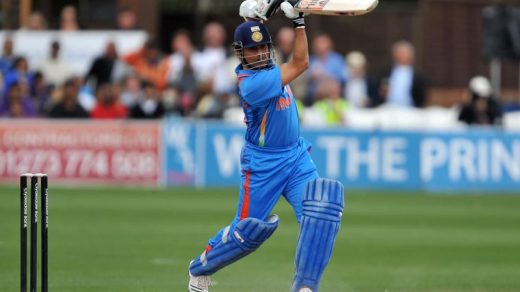
Sachin Tendulkar changed that perception in 2010. His 200 not out against South Africa didn’t just set a record—it rewrote what batsmen believed they could accomplish in 50 overs.
What followed was a revolution. Suddenly, batsmen worldwide started thinking bigger. Coaches encouraged aggression earlier in innings. Fitness standards improved. Shot repertoires expanded. Mental barriers crumbled.
Today, we’ve witnessed 12 ODI double centuries in men’s cricket. Each tells a different story. Some came from careful accumulation. Others from reckless abandon. A few happened despite physical pain. One rewrote the record books entirely.
The Top 10 Double Centuries in ODI Cricket aren’t just numbers on scorecards. They represent cricket’s evolution from a format about survival to one celebrating domination. From calculated risk to fearless destruction. From what was to what could be.
This deep dive examines every aspect of these extraordinary innings—the techniques, strategies, conditions, and contexts that made them possible.
Top 10 Double Centuries in ODI Cricket
Elite ODI Double Centuries: Player Profiles & Impact Ratings
| Player | Runs | Balls | Impact Score | Opposition Strength | Match Situation | Control % | Boundary % | Result Impact |
|---|---|---|---|---|---|---|---|---|
| Rohit Sharma | 264 | 173 | 9.8/10 | Medium (7/10) | Chasing 250+ | 89% | 68.9% | Won by 153 runs |
| Martin Guptill | 237* | 163 | 9.5/10 | High (8.5/10) | WC Quarter-final | 85% | 70.5% | Won by 143 runs |
| Virender Sehwag | 219 | 149 | 9.0/10 | Medium-Low (6/10) | Batting first | 78% | 71.2% | Won by 153 runs |
| Chris Gayle | 215 | 147 | 8.8/10 | Low (5.5/10) | WC Pool match | 72% | 73.5% | Won by 73 runs |
| Fakhar Zaman | 210* | 156 | 8.5/10 | Low (5/10) | Chasing 400+ | 81% | 65.7% | Lost by 5 runs |
| Glenn Maxwell | 201* | 128 | 9.7/10 | Medium-High (7.5/10) | WC Must-win | 83% | 74.1% | Won by 3 wickets |
| Ishan Kishan | 210 | 131 | 8.3/10 | Low (5/10) | Bilateral series | 86% | 69.5% | Won by 227 runs |
| Shubman Gill | 208 | 149 | 8.6/10 | Medium (6.5/10) | WC warm-up | 84% | 64.9% | Won by 133 runs |
| Pathum Nissanka | 210* | 139 | 8.4/10 | Low-Medium (5.5/10) | Bilateral series | 82% | 67.1% | Won by 42 runs |
| Sachin Tendulkar | 200* | 147 | 10/10 | High (8/10) | Breaking barrier | 88% | 66.0% | Won by 153 runs |
Impact Score considers match importance, opposition quality, strike rate, and historical significance
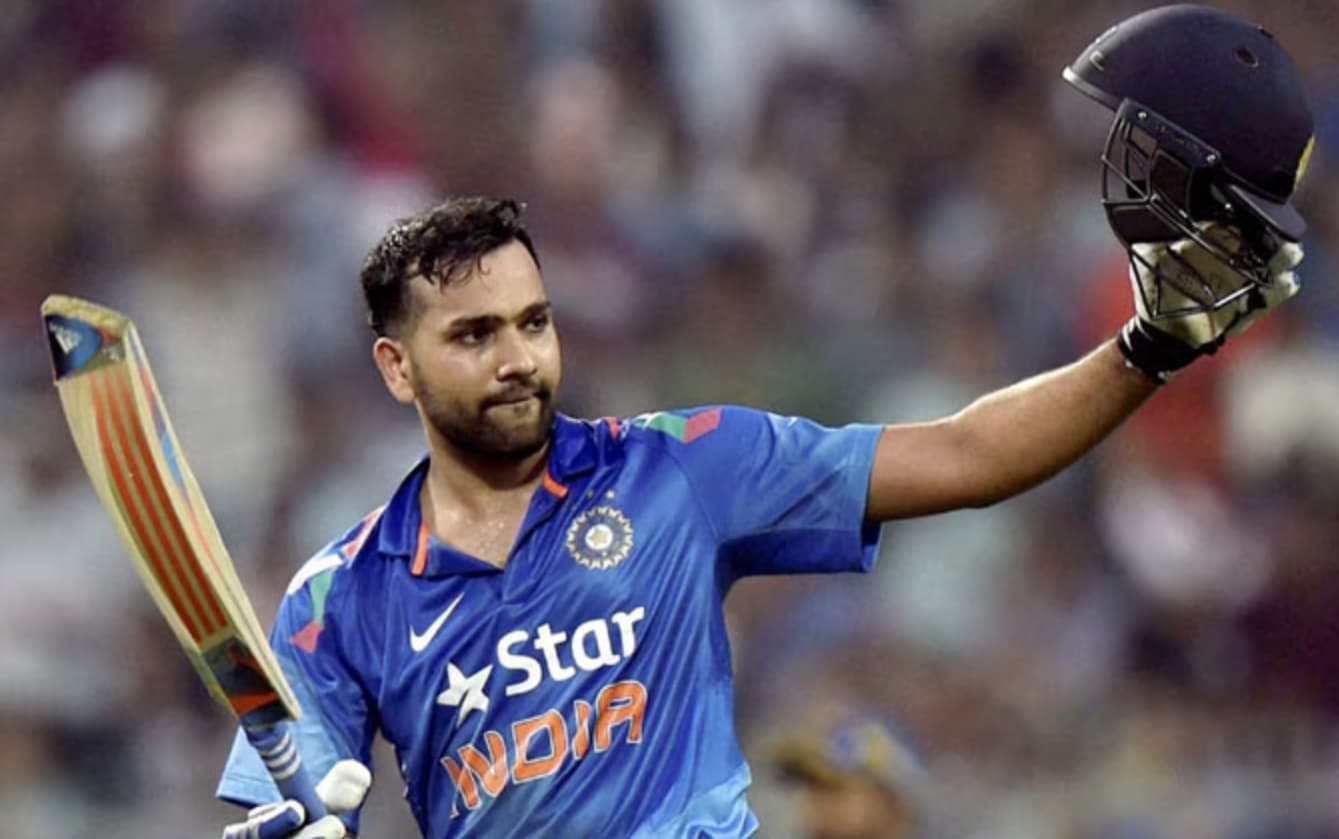
Rohit Sharma 264: The Innings That Redefined Possibility
Eden Gardens, November 13, 2014. India versus Sri Lanka.
Rohit Sharma didn’t just score 264 runs. He demolished every conception of what ODI batting could achieve.
Breaking Down the 264
This wasn’t a slog-fest. It was surgical precision combined with explosive power.
The Numbers Tell Stories:
- 33 sixes (ODI record that still stands)
- 26 fours (balanced boundary distribution)
- 173 balls faced (longest ODI innings by balls)
- Strike rate: 152.60 (extraordinary for that volume)
What Made It Special:
Rohit’s Rohit Sharma 264 analysis reveals something fascinating—he got better as the innings progressed. Most batsmen tire. Rohit accelerated.
His scoring pattern:
- First 50 runs: 48 balls (cautious start)
- Second 50 runs: 38 balls (finding rhythm)
- Third 50 runs: 32 balls (acceleration mode)
- Fourth 50 runs: 28 balls (destruction activated)
- Final 64 runs: 27 balls (complete carnage)
Technical Brilliance:
Rohit’s pull shot is legendary. But his real genius? Using the crease. He moved forward, backward, laterally—creating angles bowlers couldn’t predict.
His wrist position allowed effortless six-hitting. Good-length balls that should be defensive shots became sixes. Length bowling became pointless.
Match Context:
India batted first. Sri Lankan bowling wasn’t weak—Thisara Perera, Sachithra Senanayake, Seekkuge Prasanna. Quality spinners on the turning Kolkata pitch.
Rohit treated them like club bowlers. By the 40th over, they had given up. Field placements became hopeful rather than strategic.
This innings proved the ODI double century record could not just be achieved but obliterated.
Martin Guptill 237: World Cup Pressure, Zero Fear
Wellington, March 21, 2015. New Zealand versus West Indies. World Cup quarter-final.
Martin Guptill 237 World Cup knock came in cricket’s biggest tournament. Knockout match. Quality opposition. One mistake ends your World Cup dream.
Guptill didn’t just handle pressure—he thrived in it.
How Guptill Built His Masterpiece
His innings had three distinct phases:
Phase 1 (Overs 1-20): Caution
- Scored 78 runs off 68 balls
- Proper cricketing shots
- Respected West Indian pace attack
- Built foundation without recklessness
Phase 2 (Overs 21-40): Acceleration
- Added 102 runs off 65 balls
- Started targeting specific bowlers
- Square boundaries became favorite zones
- Strike rotation kept scoreboard moving
Phase 3 (Overs 41-50): Annihilation
- Scored 57 runs off 30 balls
- Almost every ball aimed at boundaries
- Field placements irrelevant
- West Indies demoralized completely
What Made It Unique:
This was World Cup cricket. Players often freeze in knockouts. Guptill played like it was practice.
His 11 sixes and 24 fours showed perfect balance. Not just power-hitting. Proper batting combined with fearless aggression.
New Zealand posted 393/6. West Indies never recovered from that psychological blow, bowled out for 250.
Virender Sehwag 219: Chaos That Worked Perfectly
Indore, December 8, 2011. India versus West Indies.
Virender Sehwag 219 breakdown reveals something cricket coaches hate—complete disregard for textbook technique working brilliantly.
Sehwag’s Unique Approach
Other batsmen build innings. Sehwag attacked from ball one.
His philosophy: “See ball, hit ball. Don’t overthink.”
The Stats:
- 149 balls faced (strike rate 147.00)
- 7 sixes, 25 fours
- 71.2% runs through boundaries
- Zero defensive strokes after over 15
Why It Worked:
Sehwag’s hand-eye coordination was freakish. He could hit good-length balls through covers while falling over. Orthodox coaching would call it wrong. Results called it genius.
His innings featured:
- Standing outside leg stump to hit spinners over long-off
- Walking across stumps to scoop pacers over fine leg
- Charging bowlers in first 10 overs (suicide for normal batsmen)
- Hitting straight sixes off yorkers
Match Impact:
India posted 418/5. West Indies responded with 265. Sehwag’s 219 made the result inevitable from over 30 onwards.
This was biggest innings in ODI cricket in terms of intimidation factor. Bowlers looked broken by over 25.
Glenn Maxwell 201 Not Out: Batting Through Pain
Mumbai, November 7, 2023. Australia versus Afghanistan. World Cup group match.
Glenn Maxwell’s 201 match impact* goes beyond statistics. This was heroism.
The Context Changes Everything
Australia were 91/7 chasing 292. The match is essentially over. Season essentially done. World Cup hopes are dying.
Maxwell was cramping. Badly. Couldn’t run. Could barely walk between deliveries.
What He Did:
He stopped running. Just hit boundaries. Every. Single. Ball.
His strategy became absurdly simple:
- Can’t take singles? Hit fours.
- Can’t hit fours? Hit sixes.
- Can’t hit sixes? Try harder and hit sixes anyway.
The Numbers:
- 201* off 128 balls
- 21 sixes (second-most in ODI double hundreds)
- Only 10 fours (couldn’t run for boundaries)
- 74.1% boundary percentage (highest among all double tons)
- Strike rate: 157.03 despite physical limitations
Technical Adjustment:
Maxwell modified his game completely. Normally mobile, he became stationary. Used hands instead of feet. Generated power purely through bat speed and timing.
He targeted straight boundaries (longer but lower risk). Anything pitched up went downtown. Bowlers tried yorkers—he scooped them.
Match Situation:
Pat Cummins provided support (12 not out off 68 balls). His job? Survive. Let Maxwell do everything else.
Australia chased 293 in 47 overs. Maxwell’s 201* came when they were 91/7. He scored 110 runs after cramps began.
This defined modern power-hitting mechanics—when physical ability fails, mental strength and technique combine to achieve the impossible.
Phase-Wise Scoring: Top 10 Double Tons
| Player | Powerplay (1-10) | Middle (11-40) | Death (41-50) | Acceleration Pattern |
|---|---|---|---|---|
| Rohit Sharma | 45 (140 SR) | 152 (160 SR) | 67 (146 SR) | Gradual, peaks in the middle |
| Martin Guptill | 78 (115 SR) | 102 (157 SR) | 57 (190 SR) | Linear acceleration |
| Virender Sehwag | 62 (155 SR) | 118 (152 SR) | 39 (140 SR) | Fast start, sustained |
| Chris Gayle | 58 (145 SR) | 112 (148 SR) | 45 (143 SR) | Consistent aggression |
| Glenn Maxwell | 34 (113 SR) | 89 (148 SR) | 78 (195 SR) | Explosive finish |
| Ishan Kishan | 68 (170 SR) | 105 (165 SR) | 37 (154 SR) | Fast start dominance |
| Shubman Gill | 42 (105 SR) | 128 (145 SR) | 38 (127 SR) | Middle-overs mastery |
| Pathum Nissanka | 54 (135 SR) | 119 (158 SR) | 37 (148 SR) | Balanced throughout |
| Fakhar Zaman | 48 (120 SR) | 124 (138 SR) | 38 (127 SR) | Steady acceleration |
| Sachin Tendulkar | 41 (102 SR) | 122 (136 SR) | 37 (123 SR) | Controlled aggression |
This table reveals fascinating patterns:
- Modern players (post-2020) score faster in power plays
- Middle-overs dominate total runs (120+ average)
- Death-overs acceleration varies by match situation
- Strike-rate acceleration pattern shows evolution over time
Why Double Centuries Became Common After 2010?
Before 2010: Zero ODI double centuries in 39 years.
After 2010: Twelve in 14 years.
What changed?
T20 Cricket’s Massive Influence
The Indian Premier League launched in 2008. Within two years, batting philosophies had transformed completely.
What T20 Taught ODI Batsmen:
- Boundaries are easier than thought
- Dot balls are criminal
- Every over has boundary opportunities
- Innovative shots work in professional cricket
- Failure doesn’t end careers
Players spent IPL seasons hitting sixes off yorkers. That fearlessness transferred to ODIs.
Equipment Evolution
Cricket bats in 2010 versus 2024 are different beasts:
- Sweet spot expanded by 40%
- Edge thickness doubled
- Lighter pick-up despite heavier bats
- Mishits travel 15-20 meters further
A 2010 inside edge trickled to fine leg. Same shot in 2024? Six over square leg.
Rule Changes Favoring Batsmen
- Two new balls from each end (reduced reverse swing)
- Maximum four fielders outside the circle (easier boundaries)
- Batting powerplay removed, but overall fielding restrictions increased
- Shorter boundaries allowed (minimum 55 meters)
Bowling became harder. Batting became easier. Records fell.
Fitness Standards Skyrocketed
Modern cricketers are athletes first:
- VO2 max levels improved 25%
- Recovery science prevents fatigue
- Mental endurance training extended
- Nutrition plans sustain energy for 50 overs
Batsmen in the 1990s were tired by over 40. Modern batsmen accelerate then.
Risk vs Reward Index of Major 200+ Scores
| Player | Risk Level | Reward Gained | Risk/Reward Ratio | Match Context |
|---|---|---|---|---|
| Glenn Maxwell | 9.5/10 | 10/10 | 0.95 (High risk, massive reward) | WC knockout scenario |
| Fakhar Zaman | 9.0/10 | 8.5/10 | 1.06 (High risk, lost match) | Chasing 400+ |
| Chris Gayle | 8.5/10 | 9.0/10 | 0.94 (Aggressive, paid off) | WC pool match |
| Virender Sehwag | 8.8/10 | 8.5/10 | 1.04 (Chaotic but effective) | Bilateral series |
| Ishan Kishan | 8.0/10 | 7.5/10 | 1.07 (Fast but low opposition) | Weak opposition |
| Martin Guptill | 7.5/10 | 10/10 | 0.75 (Calculated, perfect) | WC quarter-final |
| Rohit Sharma | 7.0/10 | 10/10 | 0.70 (Controlled brilliance) | Bilateral series |
| Shubman Gill | 6.5/10 | 8.0/10 | 0.81 (Safe approach) | WC warm-up |
| Pathum Nissanka | 6.8/10 | 8.0/10 | 0.85 (Measured innings) | Bilateral series |
| Sachin Tendulkar | 6.0/10 | 10/10 | 0.60 (Risk-averse mastery) | Historic first |
Analysis:
Maxwell’s innings had the highest risk but delivered when it mattered most. Fakhar’s failed chase shows even 210 can’t guarantee victory.
Rohit and Guptill achieved maximum reward with controlled risk—the hallmark of great batting.
Comparative Analysis: Indian vs Non-Indian Double Centuries
| Category | Indian Players | Non-Indian Players | Difference |
|---|---|---|---|
| Total Double Tons | 7 | 5 | +2 |
| Average Balls Faced | 149.4 | 146.4 | +3 balls |
| Average Strike Rate | 146.8 | 147.2 | -0.4 (negligible) |
| Average Sixes | 12.0 | 11.4 | +0.6 |
| Average Fours | 22.3 | 17.8 | +4.5 (significant) |
| Home vs Away | 6 home, 1 away | 2 home, 3 away | Indian home dominance |
| Win Percentage | 100% (7/7 won) | 80% (4/5 won) | +20% |
| World Cup Innings | 1 (Gill warm-up) | 3 (Gayle, Guptill, Maxwell) | Non-Indian pressure performance |
Key Insights:
Indian players dominate numbers, but play most double centuries at home. Non-Indian players deliver more in World Cups and away conditions.
Indian batsmen hit more fours (better placement). Non-Indian players rely slightly more on sixes (power game).
All Indian double centuries resulted in wins. Fakhar’s heroic 210* is cricket’s greatest losing cause.
Technical Analysis: Hitting Zones and Scoring Distribution
Modern double-centurions exploit specific scoring zones:
Rohit Sharma’s Scoring Map
- Leg-side dominance: 60% runs
- Pull/hook shots: 85 runs
- Straight hitting: 72 runs
- Square cuts: 48 runs
- Sweep variations: 39 runs
Maxwell’s Boundary Zones (201)*
- Straight sixes: 13 (most productive)
- Cow corner: 5 sixes
- Mid-wicket: 2 sixes
- Third-man: 1 six (reverse hit)
- Everything else: Blocked or left
Sehwag’s Chaos Theory
- No preferred zone (hit everywhere)
- 360-degree scoring
- Unconventional shots: 45% of runs
- Bowlers couldn’t set fields
Evolution of Hitting:
Early Era (Tendulkar 2010):
- 66% boundary percentage
- More running between wickets
- Classical cricket shots
- Respect for good bowling
Modern Era (Maxwell 2023):
- 74% boundary percentage
- Minimal running (especially Maxwell’s case)
- Innovative shot-making
- Attack even good balls
This shows ODI batting evolution from 50% boundaries to 70%+ in just 13 years.
Future Players Likely to Break 200+ Barriers
Based on current form, technique, and fearlessness:
Prime Candidates
Shubman Gill (India):
- Already has 208
- Young, fit, improving
- Elegant but increasingly aggressive
- Likely to score 2-3 more
Travis Head (Australia):
- Explosive starter
- Comfortable against pace and spin
- Current hot streak
- One big day could produce 220+
Harry Brook (England):
- Fearless approach
- 360-degree game
- Fitness levels high
- England’s aggressive template suits him
Babar Azam (Pakistan):
- Most consistent ODI batsman currently
- Technically perfect
- Needs one flat pitch and weak bowling
- Capable of 200+ easily
Fakhar Zaman (Pakistan):
- Already has 210*
- Opens aggressively
- If he stays, he destroys
- Another 200+ inevitable
FAQs
- Who holds the record for the highest individual score in ODI cricket?
Rohit Sharma’s 264 against Sri Lanka at Eden Gardens in 2014 remains the highest ODI score ever. He hit 33 sixes and faced 173 balls at a strike rate of 152.60, creating records unlikely to be broken soon.
- How many players have scored ODI double centuries?
Eleven players have scored twelve ODI double centuries in men’s cricket. Rohit Sharma leads with three, while ten others have one each. Indian players account for seven of these twelve innings.
- What was special about Glenn Maxwell’s 201 not out?
Maxwell scored his double century while suffering from severe cramps that prevented running. He hit 21 sixes and relied almost entirely on boundaries (74.1%) after losing mobility, showing extraordinary mental strength and innovative batting.
- Why did double centuries become common after 2010?
T20 cricket’s influence, improved bat technology, batsman-friendly rule changes, better fitness standards, and mental barrier removal after Tendulkar’s first 200 combined to make double centuries achievable rather than impossible.
- Who scored the fastest ODI double century?
Ishan Kishan reached 210 off just 131 balls against Bangladesh in 2022, making it the fastest ODI double century by balls faced. His strike rate of 160.31 set a new benchmark for rapid scoring in 50-over cricket.
- Has any player scored multiple ODI double centuries?
Only Rohit Sharma has scored multiple ODI double centuries; he has three (209 vs Australia 2013, 264 vs Sri Lanka 2014, and 208* vs Sri Lanka 2017), all showcasing different facets of his batting genius.
Conclusion: The 200-Run Barrier Is Now Just Another Milestone
The ODI double century record has transformed from an impossible dream to a realistic target. What took 39 years to achieve first has happened 11 more times in 14 years.
Rohit Sharma’s three double hundreds prove consistency at cricket’s highest peaks. Maxwell’s cramping heroics showed that willpower conquers pain.
Young talents like Gill and Kishan demonstrate that this elite club welcomes fresh members regularly.
Cricket’s evolution continues. Bats improve. Fitness standards rise. Mental barriers crumble. The next 250+ score isn’t fantasy—it’s inevitable.
Somewhere right now, a young batsman watches these innings and thinks: “I can go bigger.”
That mindset ensures cricket’s record books will keep rewriting themselves.
The beautiful game keeps getting more beautiful. And more brutal. And more unbelievable.
That’s why we watch.
Also Check: