by
by Fifteen balls. That’s all Fatima Sana needed.
When Pakistan’s captain reached her fifty against Zimbabwe in Karachi in 2026, she didn’t just win a T20I — she claimed the fastest fifty in Women’s T20I history and reset the benchmark for what attacking batting in the women’s game looks like at its most extreme.
But she didn’t arrive at that record in a vacuum. Five other innings — from five different players, across four nations and more than a decade of Women’s T20 cricket — had already been redefining the limits of fast scoring in this format.
Together, these six knocks tell the story of a sport that has been quietly transforming itself into something genuinely exhilarating.
Fastest Fifty in Women’s T20I History
Here’s the complete list, ranked by balls faced, with every match given the context it deserves.
Top 6 Fastest Fifties in Women’s T20I History
1. Fatima Sana — 15 Balls vs Zimbabwe, Karachi, 2026
The record. Currently untouched.
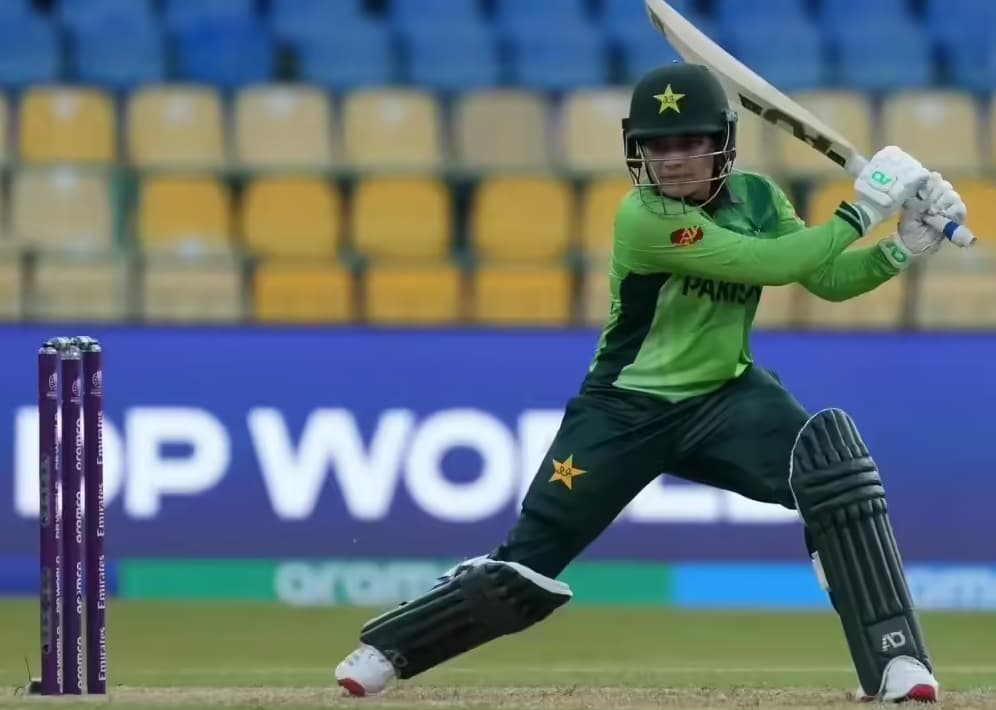
Pakistan’s captain arrived at the crease in the 3rd T20I against Zimbabwe and batted with the kind of authority that comes from total clarity of purpose. Fifty off 15 balls. Finished on 62* off 19. Ten boundaries, multiple sixes — and not a single delivery that hinted at hesitation.
Pakistan posted 223 in the first innings, with Saira Jabeen scoring 50 and Ayesha Zafar contributing 45. The total was formidable without Fatima’s contribution. With it, the match was effectively over before Zimbabwe had faced a ball.
Zimbabwe’s chase confirmed as much. They folded for 90 in 17.1 overs. Sadia Iqbal took 3/20, Nashra Sandhu claimed 2/21, and Fatima picked up a wicket herself to cap an all-round performance of the highest order.
Three balls faster than the joint second position. That’s the current margin between Fatima Sana and the rest of Women’s T20I history on this particular record. It’s a margin that tells you everything about the quality of what happened in Karachi.
2. Sophie Devine — 18 Balls vs India, Visakhapatnam, 2015
The innings that shifted the conversation about what women’s T20 batting could be.
There’s a version of Women’s T20 cricket that existed before Sophie Devine’s 18-ball fifty against India in 2015, and a version that came after it. The gap between those two versions is larger than people tend to acknowledge.
India had posted 125, with Mithali Raj top-scoring on 35 off 23. Conventional wisdom in 2015 said that was a competitive total for a women’s T20I chase. Devine disagreed. She finished with 70 off 22 balls — a strike rate of over 318 — and New Zealand chased the target in 12.3 overs with a comfort that made the whole thing look straightforward.
It wasn’t straightforward. It was deliberate, skilled, and ahead of its time.
In 2015, aggressive batting in Women’s T20Is wasn’t yet celebrated or expected. It was still treated as a risk. Devine took that risk, executed it flawlessly, and set a standard that the women’s game has spent the years since trying to match. Her 18-ball milestone held at the top of the fastest Women’s T20I fifties list for years — and it remains, contextually, one of the most important innings ever played in the format.
3. Phoebe Litchfield — 18 Balls vs West Indies, 2023
Australia’s batting depth, expressed in five sixes.
When you come in at number six in a T20I and leave having scored 52* off 19 balls — three fours, five sixes, fifty in 18 deliveries — you haven’t just done your job. You’ve made a statement.
Phoebe Litchfield made that statement against the West Indies in 2023. Australia had posted 212/6, with Ellyse Perry scoring 70 off 46 and Georgia Wareham contributing a rapid 32 off 13. Litchfield came in for the final push and delivered it with an ease that belied both the situation and her age.
The match ended in one of the great Women’s T20I chases. Hayley Matthews blazed 132 off 64, and Stafanie Taylor made 59 as the West Indies got home. Litchfield’s innings became a footnote in the result. It shouldn’t stay that way.
Five sixes in 19 balls, at number six, with a composed strike rate that never tipped into recklessness — that’s a very specific kind of skill. Australia builds it deliberately, and Litchfield is its sharpest current expression. Her name on this list is well and truly earned.
4. Richa Ghosh — 18 Balls vs West Indies, 2024
What India’s attacking batting philosophy looks like when it’s working perfectly.
Nobody who watches Indian women’s cricket regularly is surprised when Richa Ghosh does something extraordinary. That’s not a slight — it’s an acknowledgement of how consistently she delivers in the hitting role India asks of her.
Against the West Indies in 2024, she delivered at her very best. 54 off 21 balls. Five sixes, three fours. Fifty in 18 deliveries.
India had built the innings carefully before Richa arrived. Smriti Mandhana made 77 off 47 at the top, Jemimah Rodrigues added 39 off 28, and the total was already heading somewhere significant. Richa’s assault pushed it to 217/4. The West Indies finished on 157/9. Radha Yadav took 4/29 in a superb bowling performance.
The innings represent something specific about where Indian women’s cricket currently stands. The team has been building toward a more aggressive T20 identity for several years — investing in power hitters, backing attacking strategies, and trusting batters to go after totals rather than simply defend them. Richa Ghosh is the clearest proof that the investment is working.
Her 18-ball fifty places her alongside Devine and Litchfield in the joint second position on this list. In terms of what it means for Indian cricket, the significance runs considerably deeper than the statistic.
5. Nida Dar — 20 Balls vs South Africa, 2019
Pakistan’s senior all-rounder is playing an innings nobody expected — and executing it perfectly.
Nida Dar has spent her career being essential to Pakistan women’s cricket in a specific way. She bowls off-spin, she leads with intelligence, and she provides the kind of experienced calm that holds batting lineups together under pressure. She is not typically described as an explosive batter.
Against South Africa in 2019, she was exactly that.
75 runs off 37 balls. Eight fours, three sixes. Fifty reached in 20 deliveries. Pakistan posted 172/5.
Dar attacked South Africa’s spinners with a purpose and precision that felt almost confrontational — reading each delivery early, positioning quickly, and striking with authority through areas the fielders couldn’t cover. The innings looked deliberate because it was.
South Africa chased 173 in 19.1 overs with four wickets in hand. The result went against Pakistan. But results don’t retroactively change what Dar did in that innings — which was produce one of the fastest fifties in Women’s T20I cricket by a player whose reputation had nothing to do with that kind of batting.
That’s the most interesting thing about her entry on this list. It expanded the definition of who belongs here.
6. Anya Vaidya — 20 Balls vs Malta, 2024
Associate cricket. Official record. Both things are true.
Sweden’s Anya Vaidya scored a 20-ball fifty against Malta in 2024, finishing on 69* off 28 balls as Sweden chased down 96 runs in 8 overs with one wicket down. The fixture was between associate nations. The batting was real.
Those two facts coexist without contradiction. Associate cricket operates at a different competitive level from full-member international cricket, and it’s worth being transparent about that distinction. But Women’s T20I records don’t come with an asterisk for opposition context — they go in the books, and this one did.
What Vaidya’s innings represents is bigger than a single statistic. Women’s cricket is being played in Sweden. Players are developing skills at a level that allows them to score 20-ball fifties in international fixtures. That’s not a curiosity — it’s a signal of genuine global growth.
The fastest fifties in Women’s T20 Internationals used to belong exclusively to players from Australia, India, New Zealand, and Pakistan. This list now includes someone from Scandinavia. The sport is wider than it was, and it’s getting wider still.
All Six Records — Quick Reference
| Rank | Batter | Balls (50) | Full Innings | Opponent | Year |
|---|---|---|---|---|---|
| 1 | Fatima Sana | 15 | 62* (19) | Zimbabwe | 2026 |
| 2 | Sophie Devine | 18 | 70 (22) | India | 2015 |
| 3 | Phoebe Litchfield | 18 | 52* (19) | West Indies | 2023 |
| 4 | Richa Ghosh | 18 | 54 (21) | West Indies | 2024 |
| 5 | Nida Dar | 20 | 75 (37) | South Africa | 2019 |
| 6 | Anya Vaidya | 20 | 69* (28) | Malta | 2024 |
Reading the List as a Whole
Six innings. Five nations. Eleven years. And a record that has moved from 18 balls to 15 in that time — not through a single dramatic leap, but through the steady accumulation of better batters, bolder coaching, and a format that increasingly rewards aggression over caution.
Sophie Devine’s 2015 fifty arrived in a Women’s T20I world where 125 was a competitive total.
Fatima Sana’s 2026 record came in a match where Pakistan posted 223. That gap in context is not incidental — it’s the whole story of how the format has grown.
Richa Ghosh and Phoebe Litchfield are the next generation of this philosophy, players who treat attacking batting as a starting point rather than an exceptional mode.
Nida Dar proves that experience and aggression aren’t mutually exclusive. And Anya Vaidya reminds the sport that the next historic innings can come from somewhere it hasn’t been watching closely.
The record at 15 balls is Fatima Sana’s. It will be someone else’s eventually. When that happens, the innings on this list will be the context that makes the new record meaningful.
Frequently Asked Questions
- Q1: Who holds the fastest fifty in Women’s T20I history?
Pakistan captain Fatima Sana, who reached her half-century in just 15 balls against Zimbabwe in Karachi in 2026. She finished unbeaten on 62 off 19 balls — the fastest 50 in Women’s T20I history by a three-ball margin over the joint second position.
- Q2: Which three players share the joint second-fastest Women’s T20I fifty?
Sophie Devine (vs India, 2015), Phoebe Litchfield (vs West Indies, 2023), and Richa Ghosh (vs West Indies, 2024) all reached their fifties in 18 balls, placing them jointly second behind Fatima Sana’s 15-ball record.
- Q3: What did Richa Ghosh score in her record-equaling innings?
Richa Ghosh scored 54 off 21 balls against the West Indies in 2024, reaching her fifty in 18 deliveries. India posted 217/4 in that match and won by 60 runs, with Radha Yadav taking 4/29 with the ball.
- Q4: How significant was Sophie Devine’s innings in 2015 compared to today’s standards?
Considerably more significant than the number alone suggests. Women’s T20I batting in 2015 was still largely conservative — totals were modest and aggressive hitting was unusual. Devine’s 18-ball fifty against India arrived in a format that wasn’t yet ready for it, which is precisely what made it so important to how the game evolved.
- Q5: Is Anya Vaidya’s record comparable to the others on this list?
In terms of official recognition, yes — Women’s T20I records apply across all member nations. In terms of competitive context, the opposition (Malta) was an associate nation, which is a meaningful distinction. Vaidya’s inclusion reflects both the official record and the reality of cricket’s global expansion into non-traditional markets.
- Q6: By how many balls does Fatima Sana lead the second-fastest Women’s T20I fifty?
Three balls. Sana reached her fifty in 15 deliveries; the joint second position is held at 18 balls by Sophie Devine, Phoebe Litchfield, and Richa Ghosh. In the context of a T20 innings, a three-ball lead on a record of this kind is a substantial margin.
A Record That Will Move Again
The fastest fifty in Women’s T20I history sits at 15 balls. It’s a number that feels almost abstract until you watch it happen — and then it feels both inevitable and astonishing in equal measure.
Women’s cricket keeps producing players capable of exactly this kind of batting. Coaching has improved.
Domestic structures are stronger. The attacking intent that once defined a handful of players now runs through entire squads. All of those points in one direction.
Someone will break Fatima Sana’s record. The players who do it will have grown up in a version of women’s cricket that Sophie Devine helped build, that Richa Ghosh helped accelerate, and that Fatima Sana pushed to a new frontier in Karachi in 2026.
That’s how records work in a sport that’s genuinely growing. And women’s cricket, right now, is exactly that.